
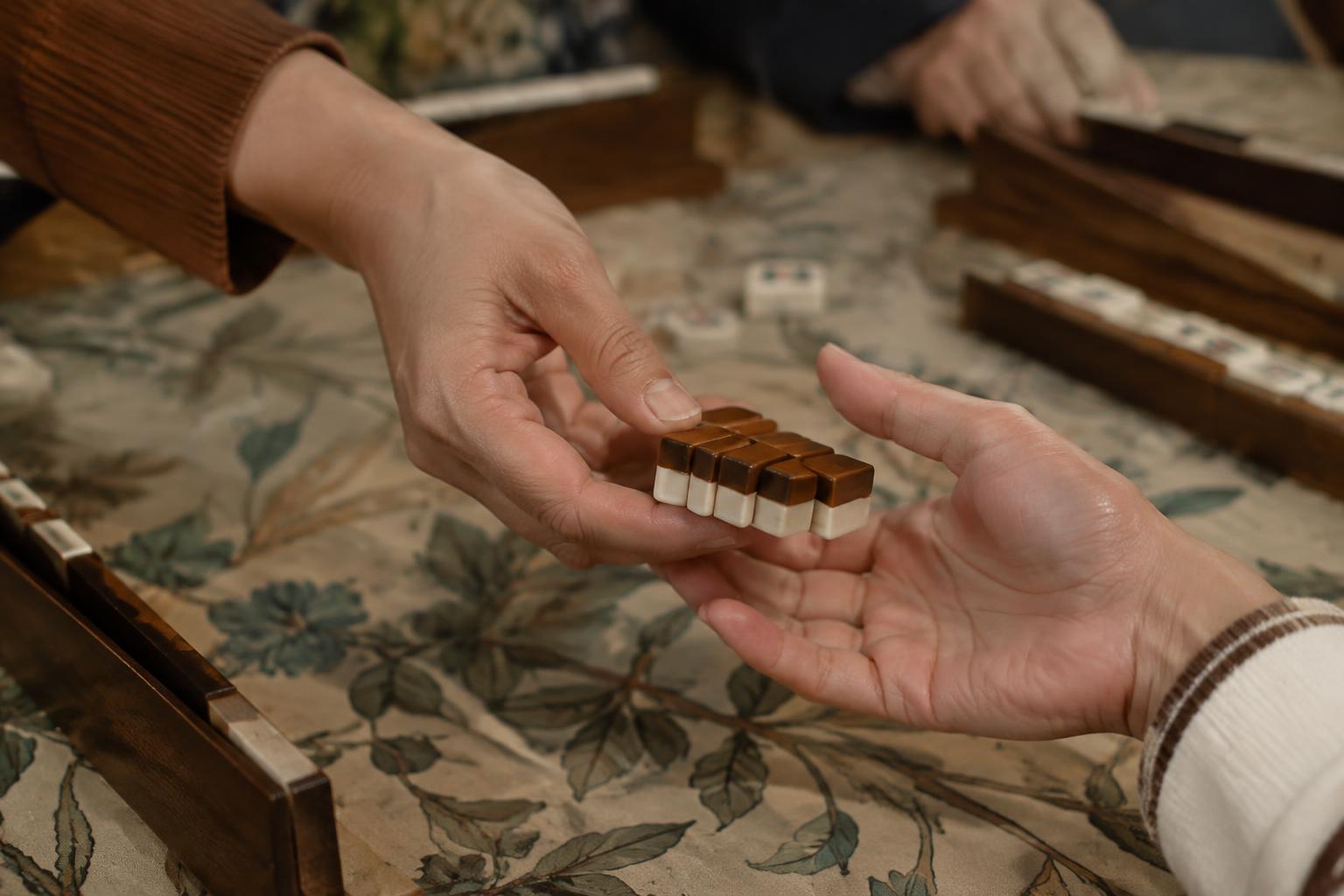
The Charleston is the tile-passing sequence that happens before anyone takes a real turn — a set of structured passes (right, across, left, with an optional "Courtesy" round after) where every player hands off tiles they don't want and hopes for better ones back. It's named after the 1920s dance, supposedly because the rhythm of passing tiles around the table reminded someone of the dance's back-and-forth footwork.
Every player passes three tiles per round, all at once, face-down. You can't see what you're getting until it's in your hand — which is what makes the Charleston equal parts strategy and nerve. Pass too aggressively and you might hand away a tile you needed. Pass too cautiously and you never improve your hand at all.
By the time the Charleston ends, most players have a real sense of which hands on the card are actually within reach — and which ones to quietly let go of. If you want to see it in motion rather than just read about it, there's a video walkthrough on our How to Play page.
Keep going with mahjong terms explained, or browse mats and tile sets in the shop.