
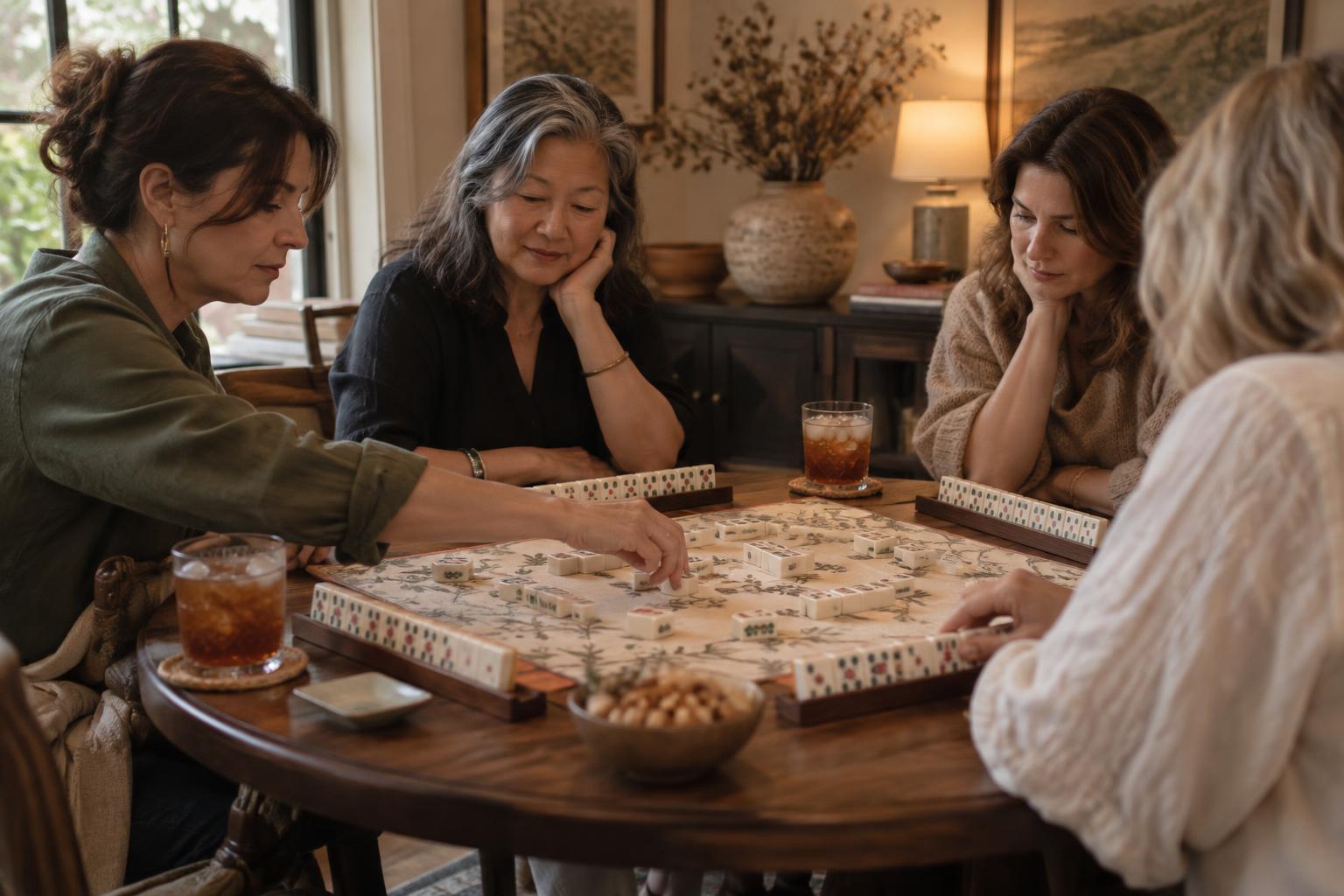
Seat four, invite five
American mahjong wants four players. Three is playable with small adjustments, but the Charleston loses much of its character. Because one person almost always cancels, invite a fifth who is happy to sit out a hand, pour drinks and take over when someone needs to leave early. A rotating fifth chair keeps the evening going instead of ending it at the first departure.
Plan for three hours, not one
A single hand runs roughly ten to twenty minutes once everyone knows the flow — longer when a new player is learning, which is the whole point of a first night. Three hours gives you time to teach, play six or eight hands and still wash the tiles without anyone glancing at the door. Tell guests the end time when you invite them; people relax when they know the shape of the evening.
Set the table for hands, not plates
The playing surface is the one thing worth fussing over. A mat quiets the clatter, protects the table and marks out where the walls go, which helps beginners more than you'd expect. Keep the racks, the card and one small dish per player on the table; move everything else — bottles, serving bowls, phones — to a side surface. Light the table from above rather than behind the players so nobody reads their tiles through a glare.
Feed people with one hand
Anything that needs a knife, a fork or a napkin per bite will slow the game down and end up on the tiles. Aim for dry, one-handed food: olives, nuts, cheese and crackers, cut fruit, something sweet at the halfway point. Serve drinks in glasses with a stable base, and keep every glass off the playing surface.
Teach as you go
Don't explain the whole game before the first tile is turned. Set up the walls, deal, and teach the Charleston as it happens — passing three tiles is easier to feel than to hear described. Play the first hand face up as a practice round if anyone is brand new. Most people understand the rhythm of draw-and-discard within two or three turns and spend the rest of the evening learning the card, which is where the real game lives.
Also in the journal: a mahjong cheat sheet for beginners.
New to the game, or teaching someone who is? Our step-by-step guide to American mahjong walks through setup, the Charleston and a full turn. Tile sets and mats are in the shop.