
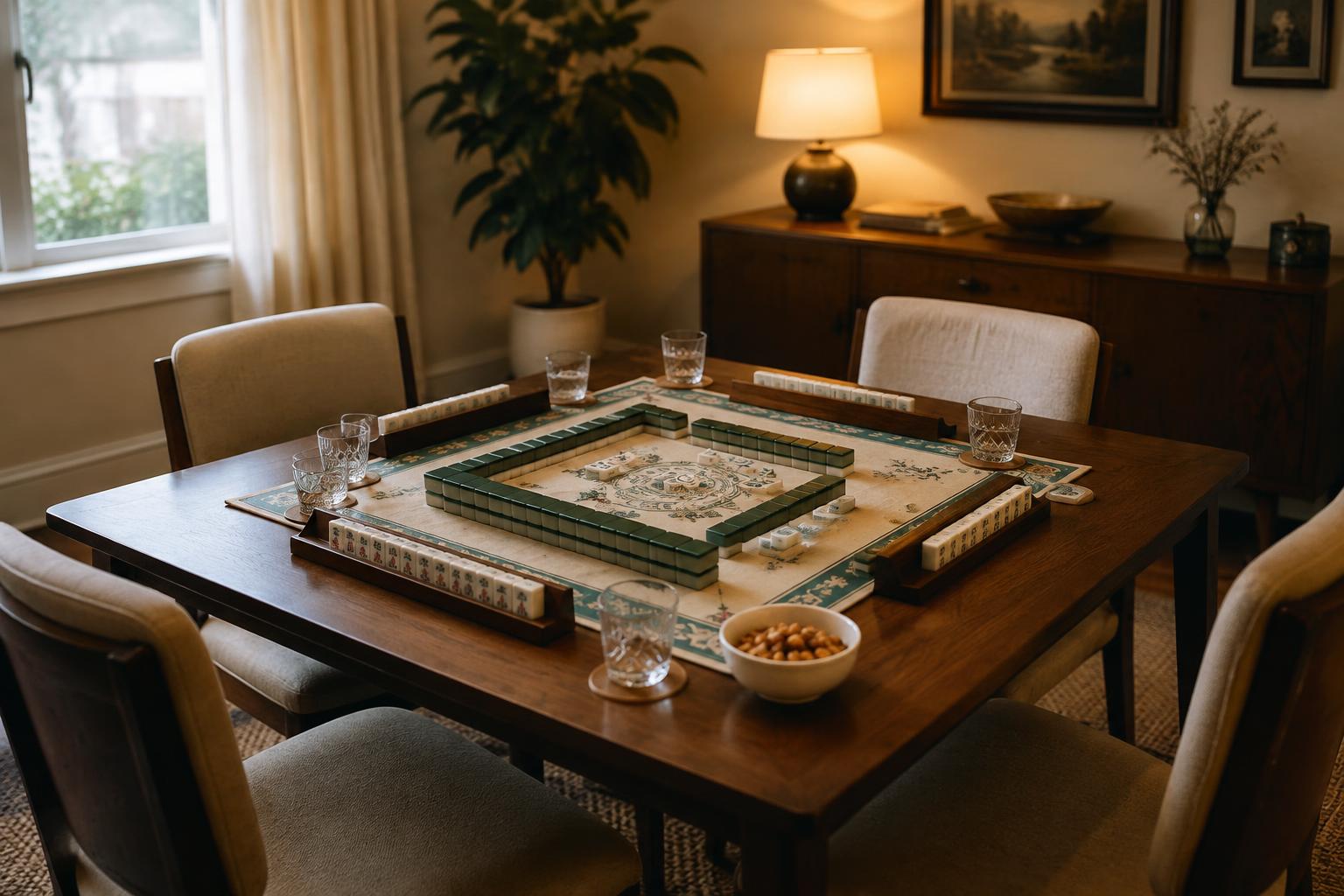
Every mahjong group starts the same way: with four people, at least three of whom don't really know what they're doing yet. That's fine. You don't need experts, you need people willing to show up on the same night every few weeks.
Start smaller than feels ambitious. Two people who already want to learn, plus you, is a real start — you just need a fourth, and that fourth is usually easier to find than you'd think once there's already a group to invite them into. Ask a neighbor. Ask someone at work who's mentioned being bored on weeknights. Post in a local Facebook or Nextdoor group; mahjong groups looking for a fourth are one of the more common asks in those spaces right now.
Pick a recurring night before you pick anything else. A group that meets "whenever everyone's free" never actually meets. Every two weeks on a Thursday, same time, same place, works better than a better night that only happens once a month.
Expect the first few sessions to be slow. Someone will be learning the Charleston in real time while everyone else waits. This is normal, and it gets faster fast — most new players go from confused to comfortable within three or four sessions. Don't rush anyone through it by playing a simplified version; the real game clicks once people have actually played it enough times to stop thinking about the rules.
Once the group has some hands under their belt, the table itself starts to matter more than people expect. A mat everyone likes, snacks that don't leave a mess on the tiles, decent lighting — small things, but they're the difference between a group that meets twice and quietly dissolves, and one that's still going a year later.
The truth about building a group is that it's less about finding the right four people and more about picking a night and defending it. Everything else follows from there.
Looking for players near you? Find a group. Setting the table? Browse mats and tile sets.